

Author Blog
The Great Housing Debate - Building a Hedgehog Home
Making a hedgehog house doesn’t have to be complicated, and if you’re not keen on DIY, there are plenty of off-the-shelf models to choose from. But how do you select the right home for your garden hedgehog?
Making a hedgehog house doesn’t have to be complicated, and if you’re not keen on DIY, there are plenty of ‘off the shelf’ models to choose from.
But how do you select the right home for your garden hedgehog?
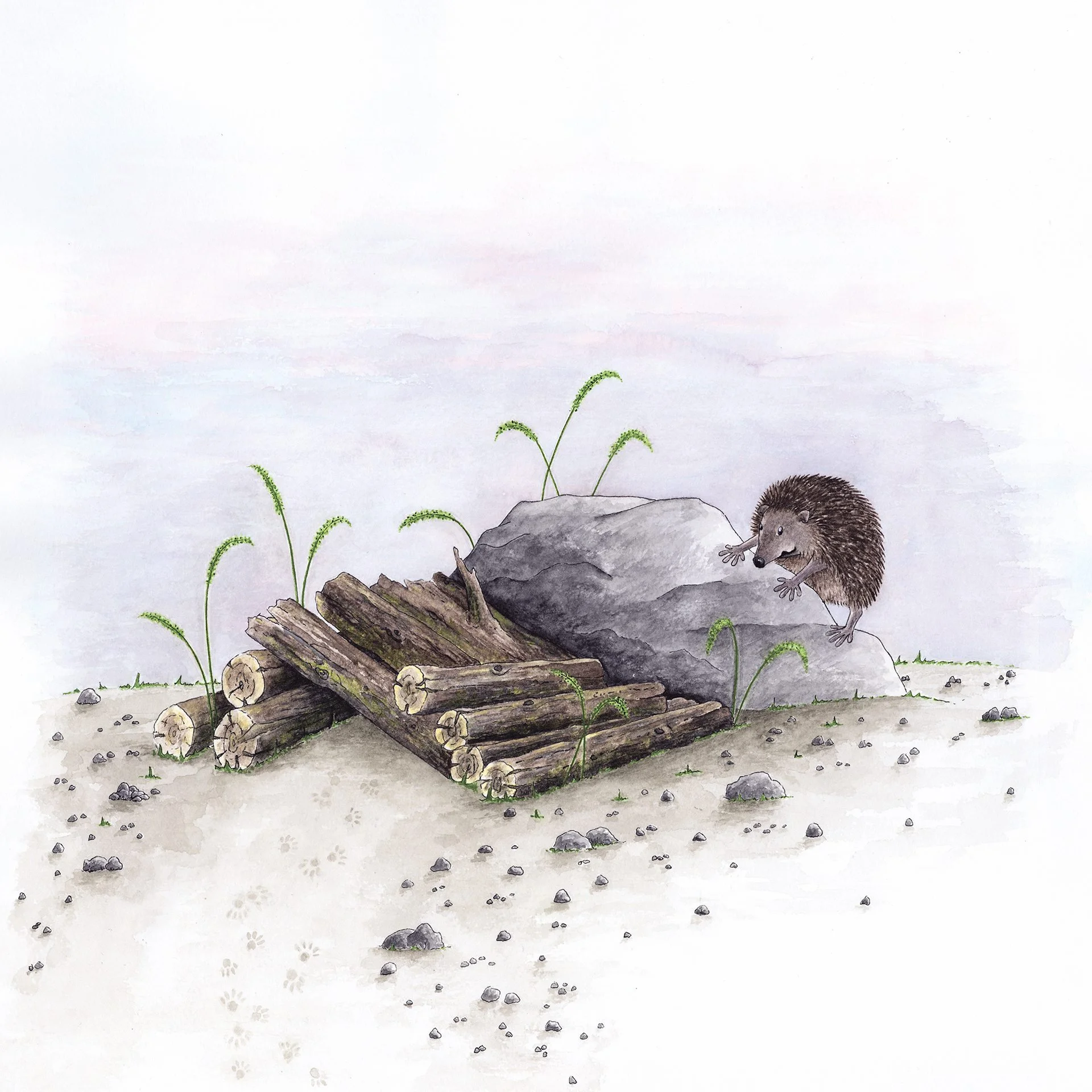
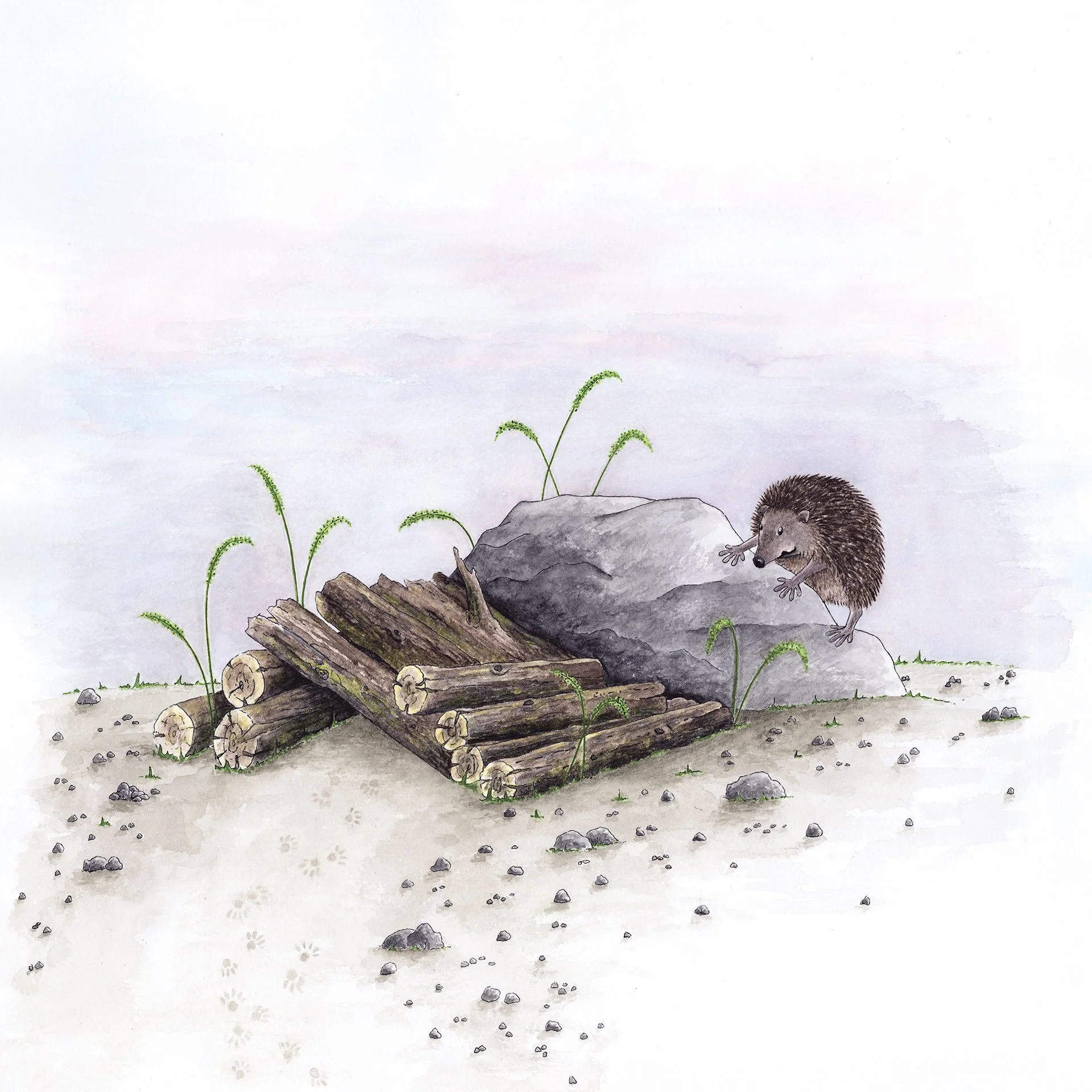
Illustration from ‘Hedgehog and the Fence’ by Helene Gardiner
Pine house, wooden slatted house, fibrewood house, log house, mud house, wicker house, igloo, hogilo, brick and slab, no base, with base, with or without entrance tunnel, basic, bespoke, single, double, hibernaculum - the list goes on!
Hedgehog homes are available to buy, or you can construct your own. There is now such a diverse range of des-res accommodation available for hedgehogs.
So, how do you choose Hedgehogs’ next home?
DIY
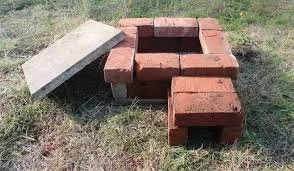
If you have access to a few bricks and a paving slab, this is one of the easiest methods to use. The weight of the materials will protect your hedgehog from predators throughout the summer breeding season and during winter hibernation.
If you don’t have a large paving slab, you can use a piece of plywood, but remember to weigh it down with bricks to avoid any unwanted attention from other animals.
It’s also good practice to incorporate a ‘tunnel’ entrance as this provides further protection from the hedgehogs being ‘hooked out’ of their nest.
Off-The-Shelf
There are so many variations of hedgehog houses available, some great, some not so.
Some have less-than-ideal features;
Homes incorporating wire can be a potential hazard if your hedgehog gets its claws caught in it.
A house without a tunnel or a separate sleeping area from the entrance provides less protection from predators.
Whatever you choose, make sure it is sighted in a quiet area, preferably tucked away in some bushes, where it won’t be disturbed.
Nesting Materials
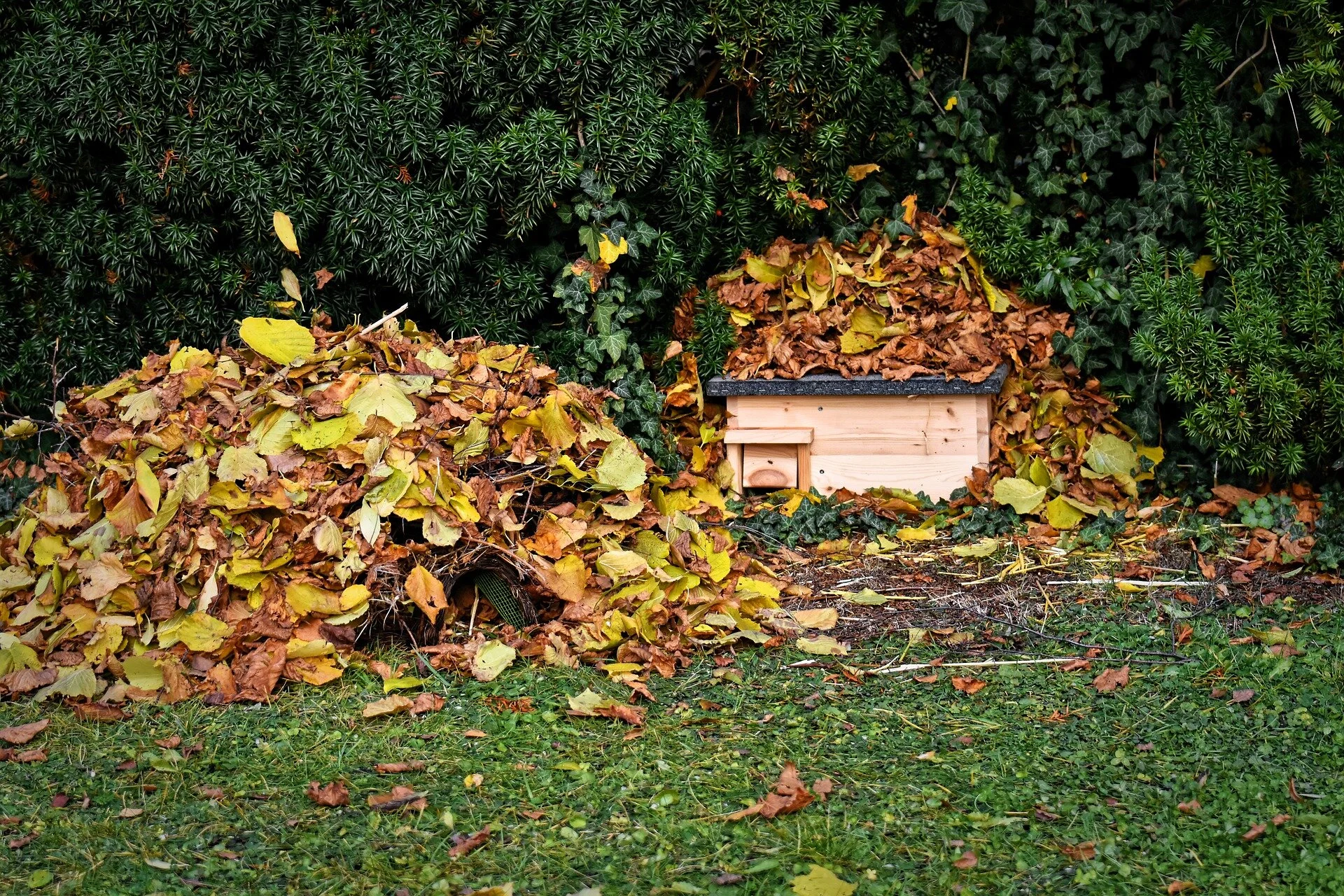
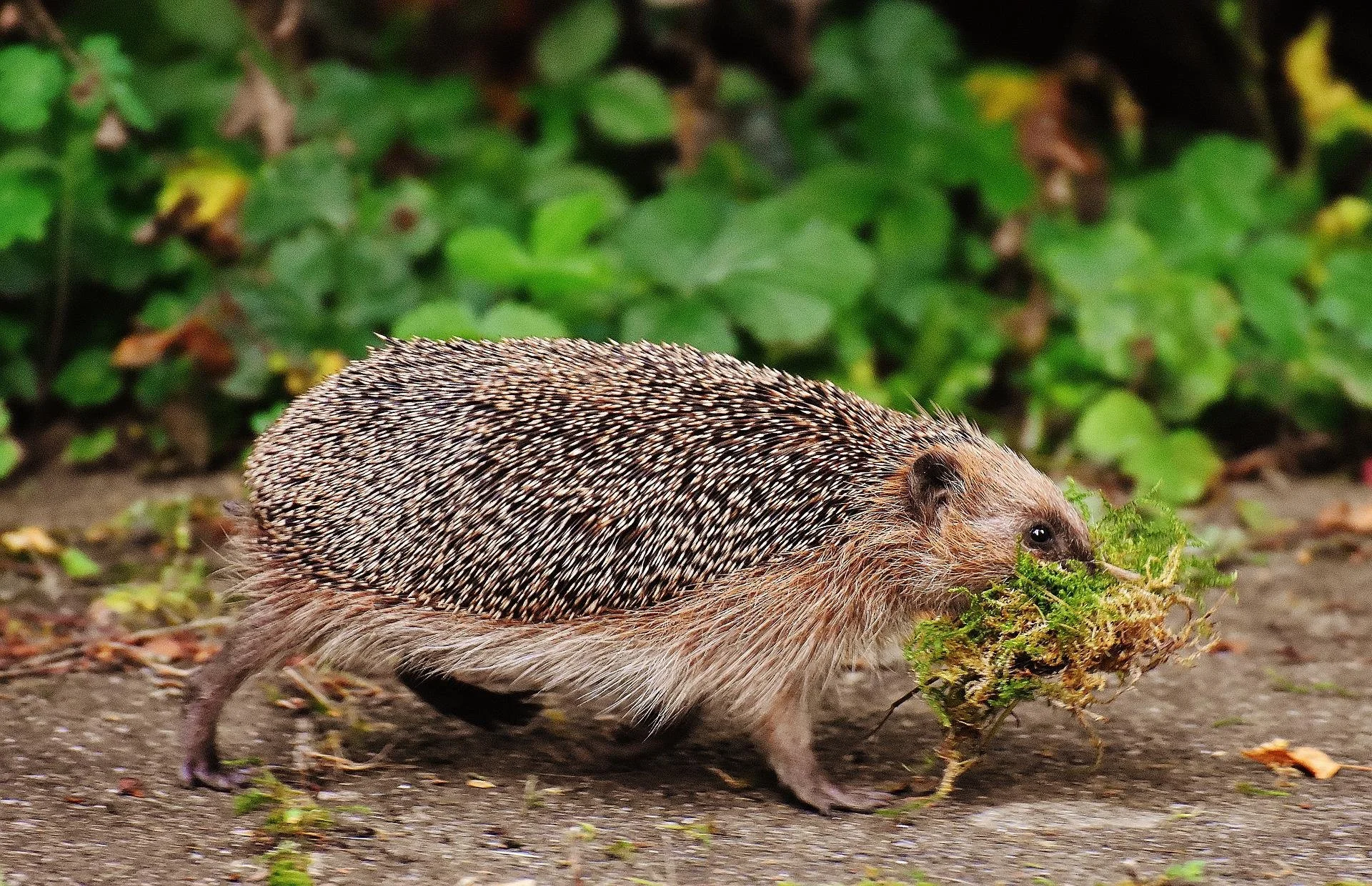
Hedgehogs are pretty resourceful, and will utilise leaf litter, twigs and moss to construct nests to sleep in, raise hoglets and hibernate in. Suitable locations can be under hedges, bushes, logs, compost heaps or sheds.
Dead plant material is an important resource not only for hedgehogs but also for other animals. Insects such as solitary bees and bumblebee queens will overwinter in leaf litter and hollow plant stems. Caterpillars may hide their pupae amongst plant material to safeguard their transformation to moths and butterflies, all-important insect pollinators.
Dry leaves, grass, and moss provide ideal bedding material.
Undisturbed areas of dead plant material and rotting logs are also an ideal place for hedgehogs to find their natural food, insects.
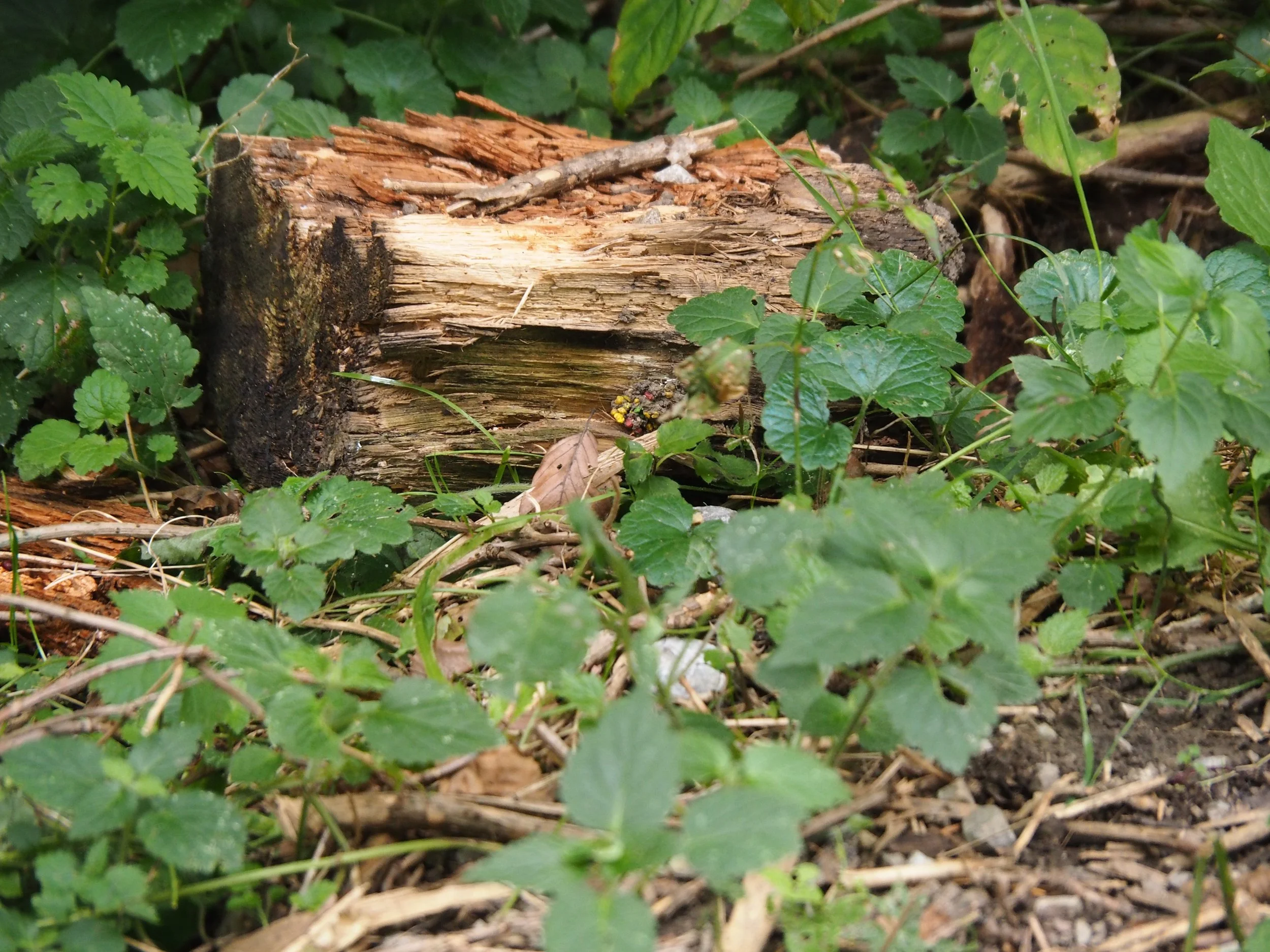
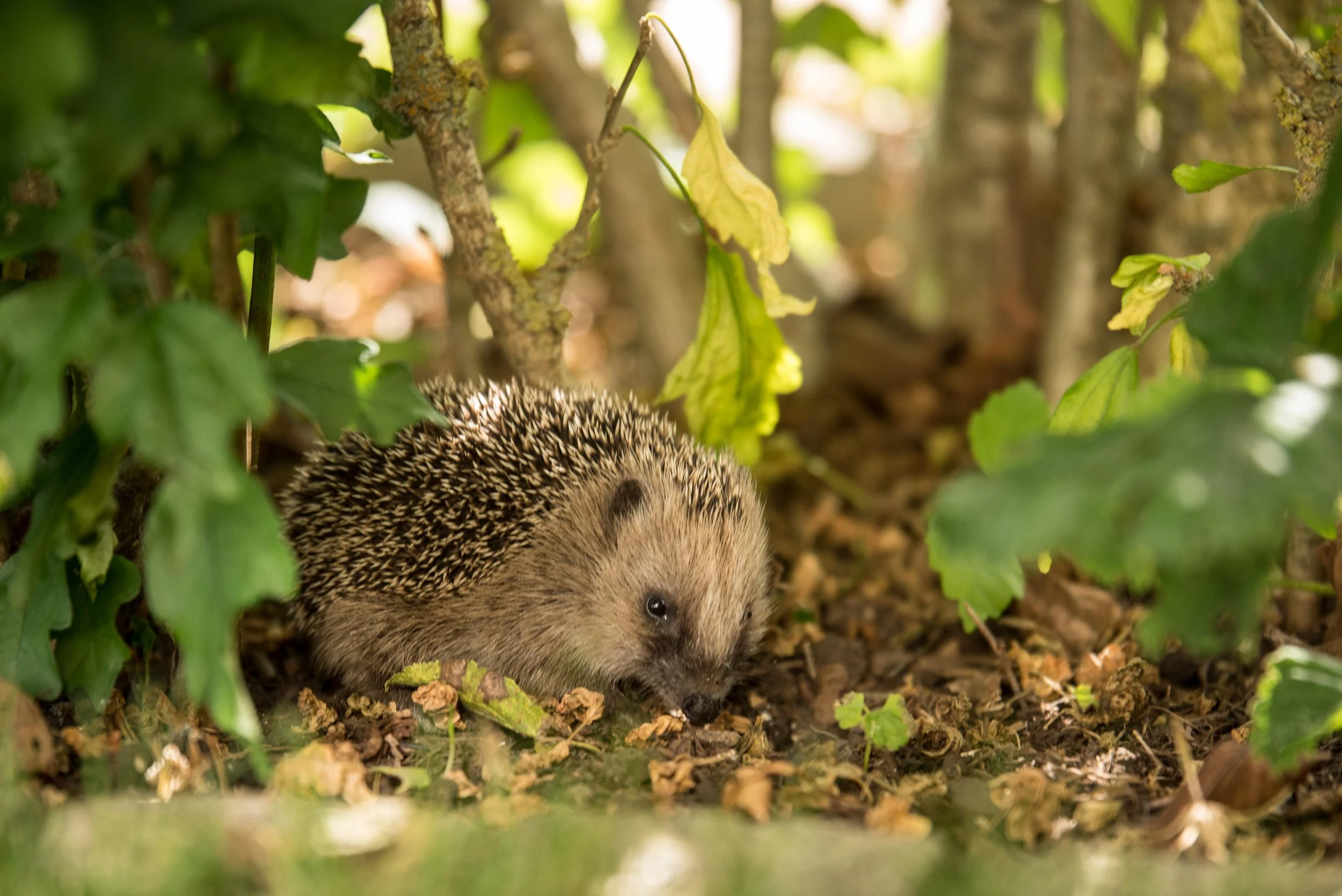
Image courtesy of Ratfink1973 on Pixabay.
Of course, if your hedgehog doesn’t find it first, other animals will also appreciate a bit of dry leaf litter!
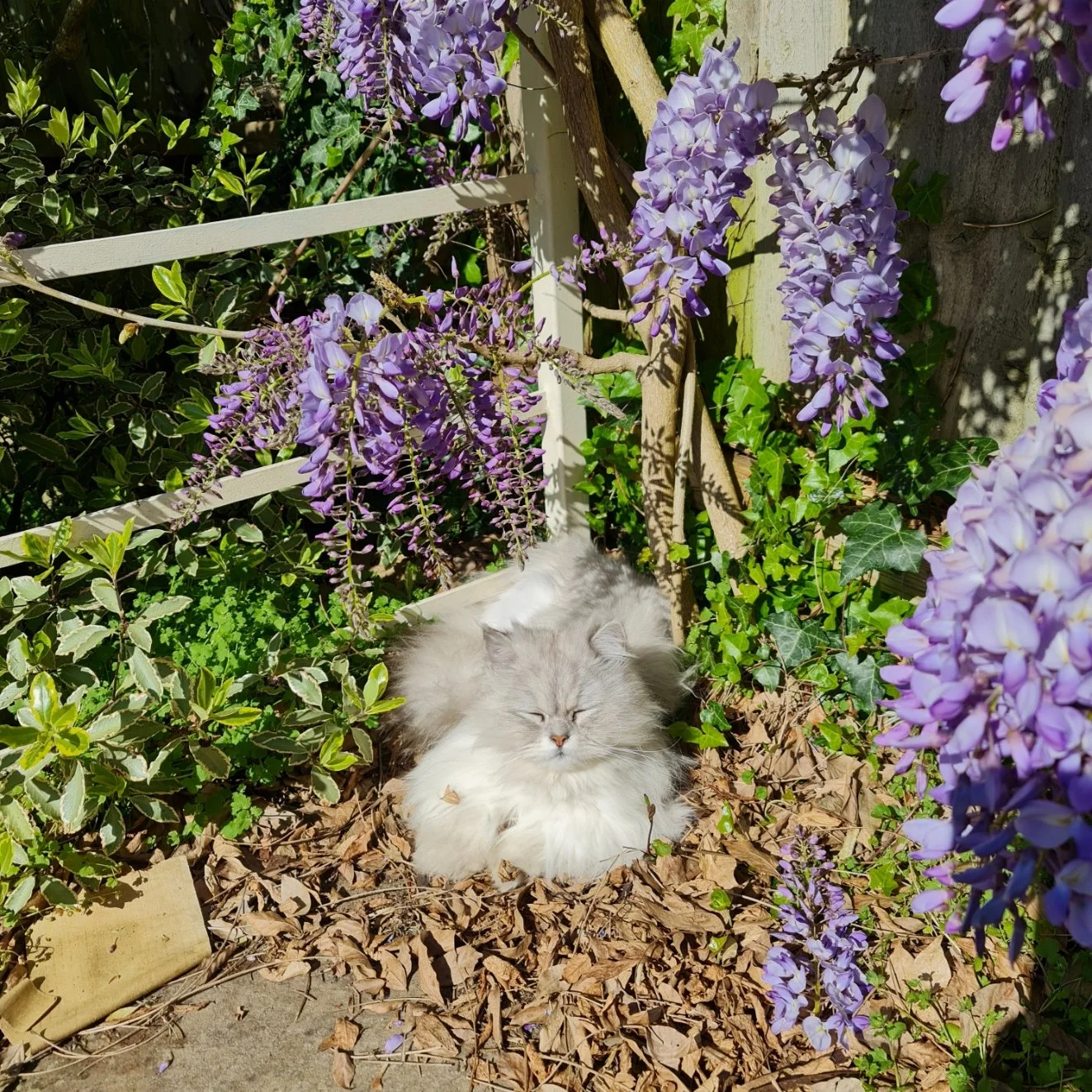
Image courtesy of Helene Gardiner
Hedgehog Highway
Of course, none of this is any good if hedgehogs can’t get into your garden in the first place!
It’s vital that hedgehogs can access areas, due to their vast range of territory. You can help hedgehogs by linking up your garden with your neighbours, creating your own hedgehog highway. Learn how to link your garden.
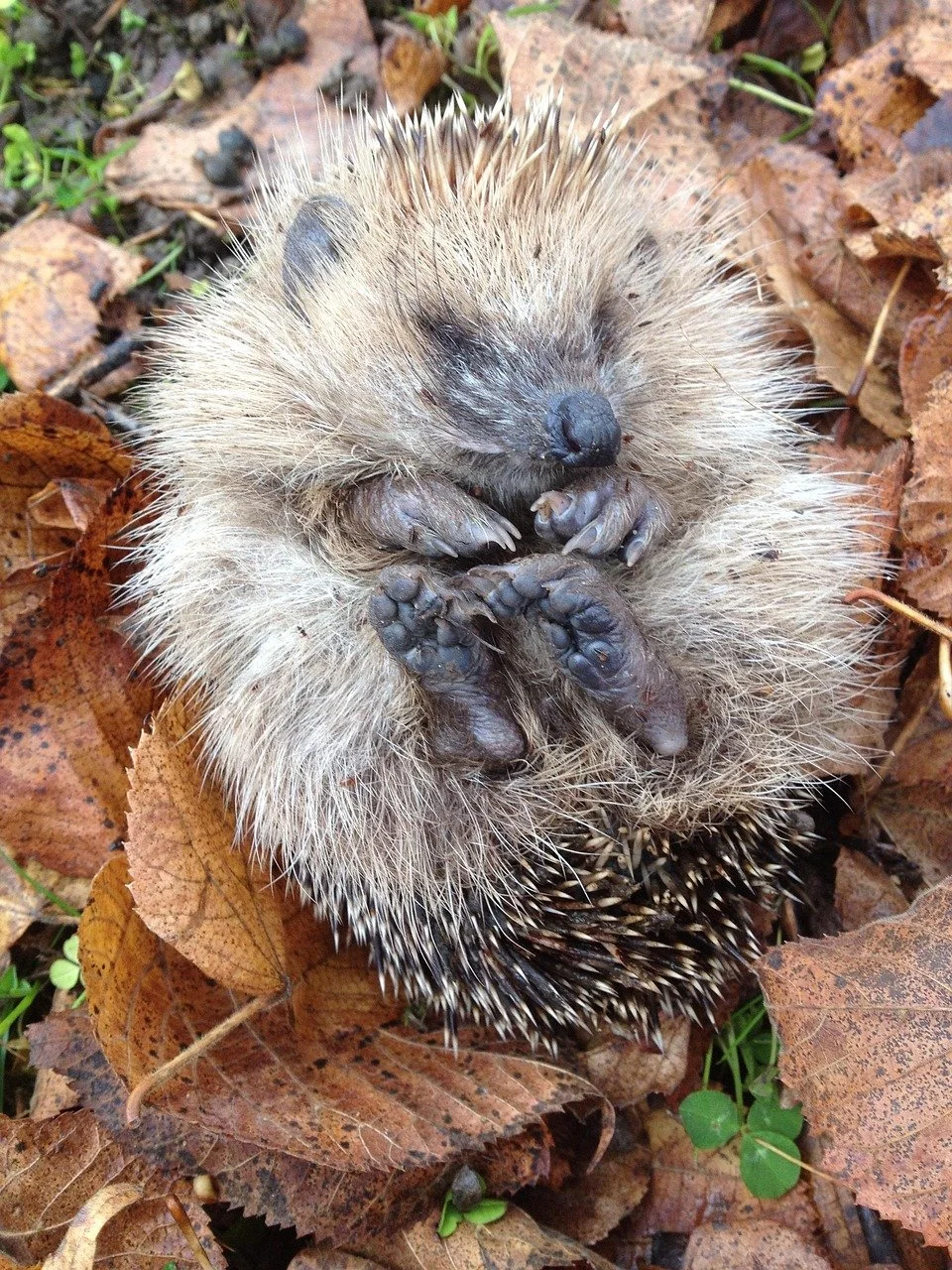
Please remember that if you have a hedgehog hibernating in your garden (between November and March in the UK), do not disturb it unless you have a good reason to.
Seek advice from the British Hedgehog Preservation Society or your nearest rescue; locate your nearest rescue here.
Hedgehog Hazards
Helping hedgehogs avoid common hazards.
The Garden Compost Heap
A gardener’s friend - the compost heap is great for soil enrichment, but it’s also a great place for hedgehogs to nest, especially amongst grass clippings, leaves and twigs. So, before you dig your garden fork in, have a thorough check for signs of hedgehogs.

Ponds & Swimming Pools
A garden pond can make a fantastic addition to your garden, providing an opportunity to encourage and observe a diverse range of wildlife. It also provides the chance to educate and encourage children to develop an interest in wildlife. Hedgehogs are great swimmers but they need a form of ramp in deep areas and a shallow area at least to one side, in order to climb out of the water if they fall in.
Who doesn’t love a swimming pool? To prevent hedgehogs from drowning, ensure they have a means to get out or keep your pool covered when not in use.

Bonfires
A pile of wood, brush, leaves and cardboard provides a very enticing nesting opportunity for hedgehogs to sleep or hibernate in. It can be difficult to check for hedgehogs after the wood pile is built, so it’s best to have all your materials ready nearby and assemble your bonfire on the day of lighting.
If this isn’t possible, thoroughly check the bonfire, using a broom to lift areas, and a torch. To make doubly sure, light it from one side so that if a hedgehog is present, it has a possible means of escape.
Fireworks
Firework displays can be incredibly beautiful and are an honoured tradition, but they are incredibly frightening for hedgehogs and other wildlife. Every year, rescue centres receive a large influx of serious casualties, some fatal, as a direct result of fireworks displays. If possible, attend an ‘organised event’ which helps to reduce the number and spread of displays. If this isn’t possible, please remember that it’s not just your pets at home that are terrified; it’s all wildlife, and they have no means to hide. So, if you must buy fireworks, opt for a silent colourful display, with no loud bangs or whistles - you will literally be saving animals’ lives!

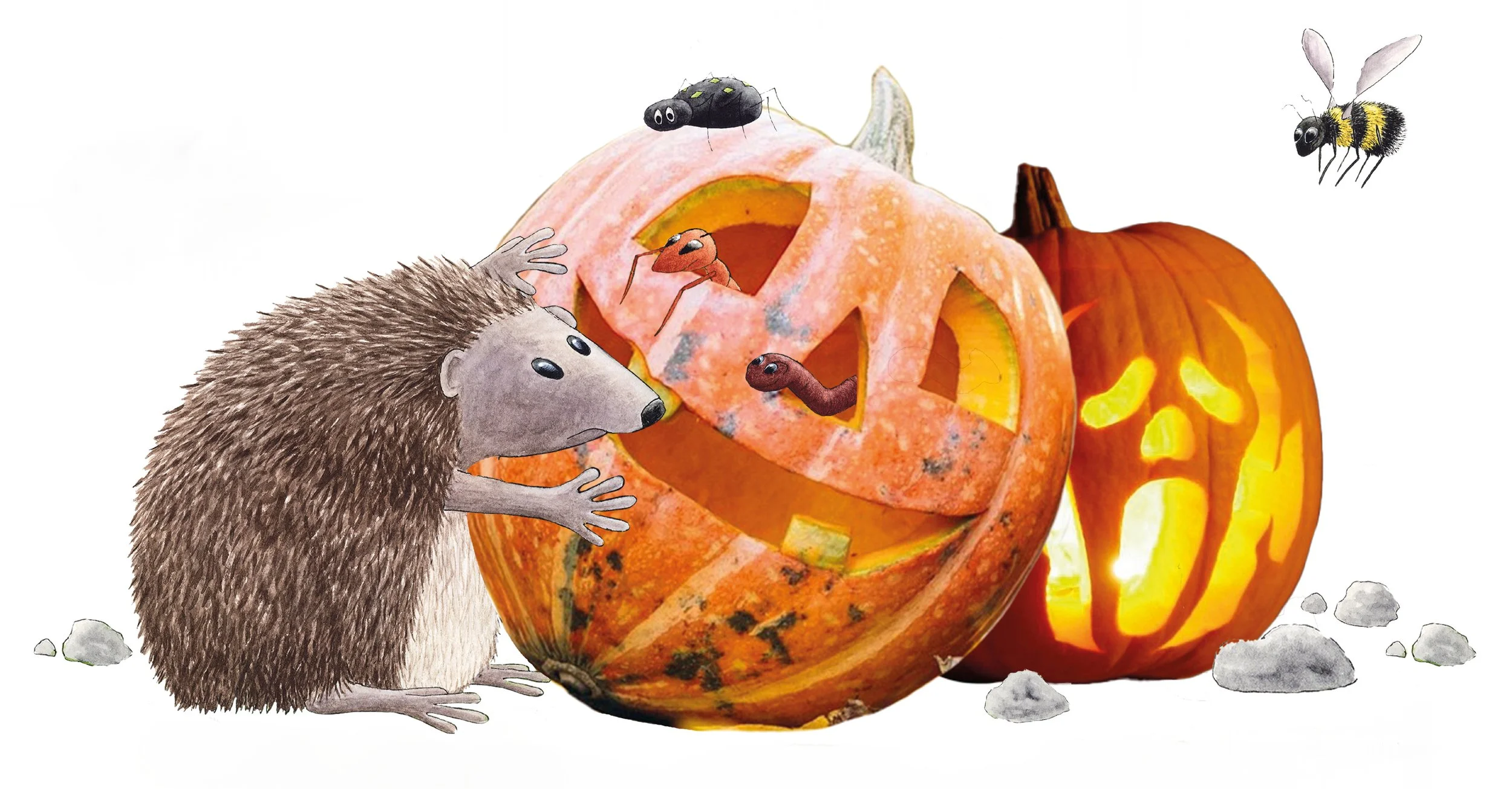
Halloween
Halloween is especially popular in America, but has become a staple celebration in the UK too. It’s always a joy to see carved pumpkins, especially if the artist makes use of the flesh in a pie, cake, or drink.
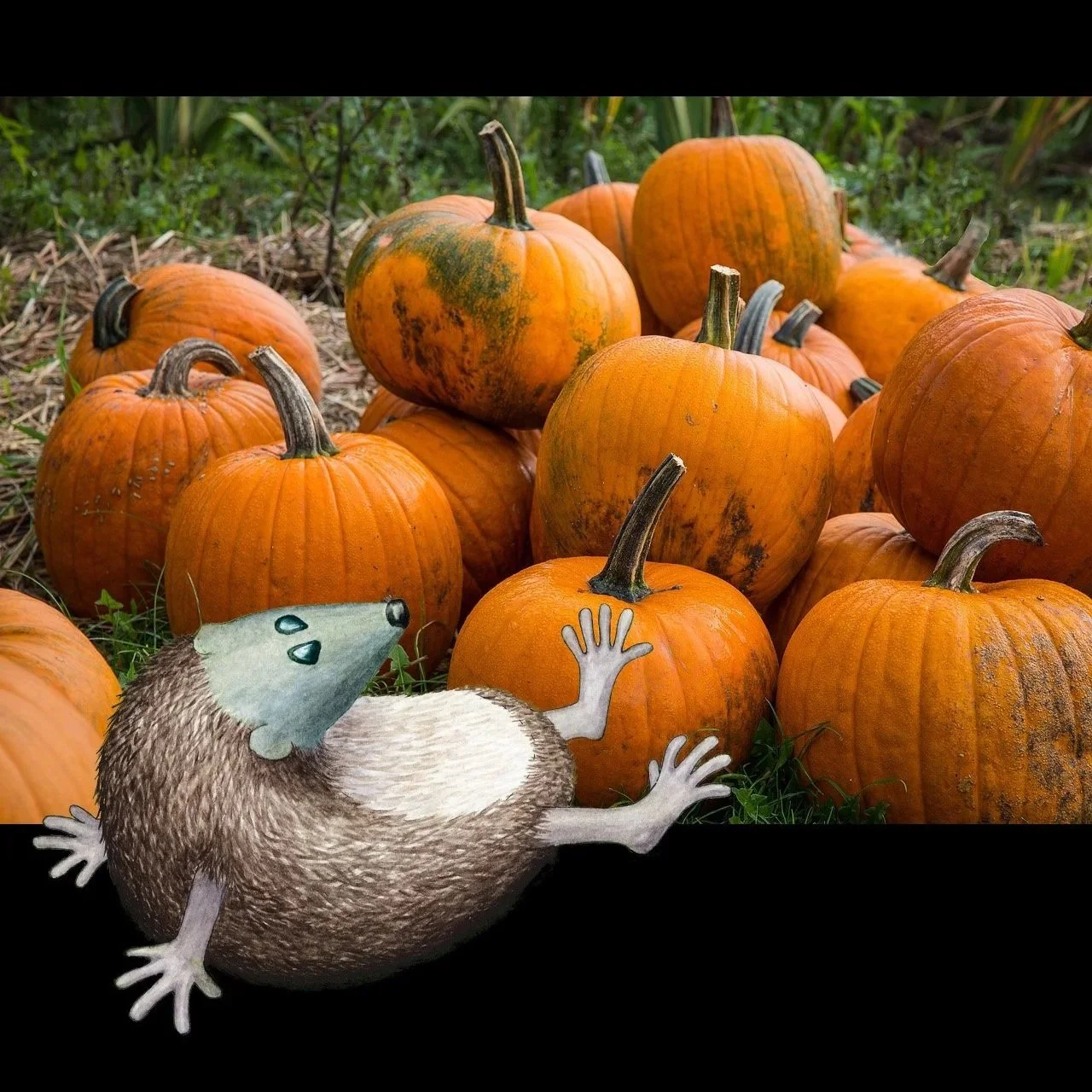
However, pumpkins left on the ground can be incredibly tempting to hedgehogs, and can make them very sick.
Pesticides & Chemicals
The use of slug pellets may poison hedgehogs. As well as killing pests, garden pesticides and chemicals can kill the beneficial insects that help to naturally protect our vegetable gardens and may inadvertently kill pollinators.
Why not encourage hedgehogs into your garden? They are, of course, our natural pest controllers.

Netting & Electric Fences
Hedgehogs can easily become entangled in netting, especially when it separates areas they are trying to access. There is nothing more heart-breaking than finding a dead hedgehog entangled in garden netting or knowing you accidentally electrocuted a hedgehog!
Ensure unused netting is stored away and any netting protecting vegetables, placed at a height sufficient to allow hedgehogs to pass under - after all, you want to encourage these marvellous natural pest controllers into your vegetable garden!
Electric fences should be checked every time, before they are switched on.

Pets
Dogs especially, can cause serious injuries to hedgehogs. If you have visiting hedgehogs, accompany your pet into the garden when you let them out at night.

Strimmers, Mowers & Garden Tools
Many of us like to get outside and tackle the garden on a sunny day. Garden tools and machinery can cause serious and often, fatal injuries to hedgehogs. Remember to check the area you are working in for hedgehogs.
Leaving a wild area, even if you only have a small garden, not only encourages hedgehogs, but other beneficial wildlife too.

Encouraging Hedgehogs Into Your Garden
How to encourage hedgehogs into your garden.
Access
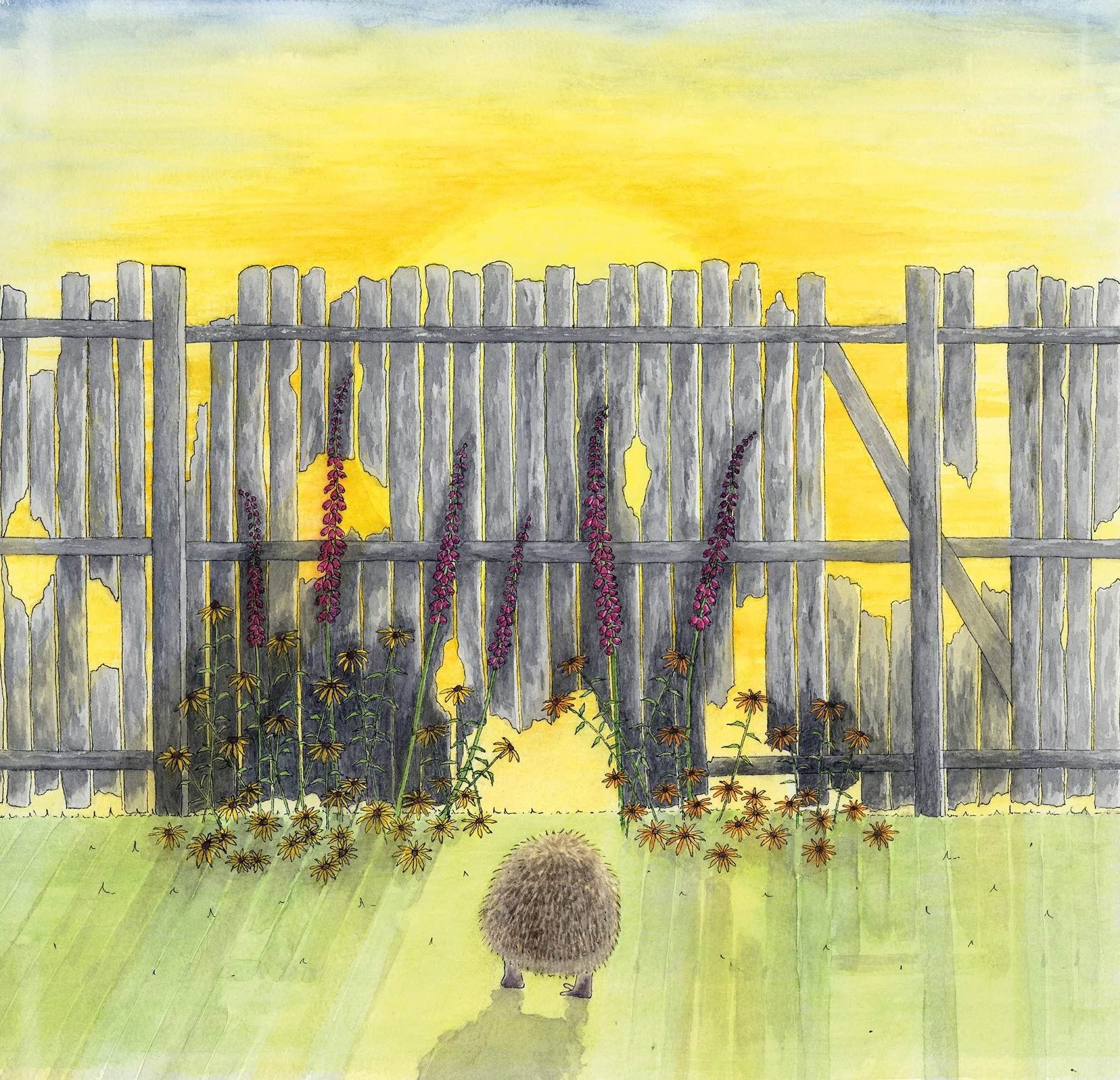
If you’ve already read ‘Hedgehogs Need Room to Roam’,you will understand the importance of providing access - can hedgehogs actually get into your garden?
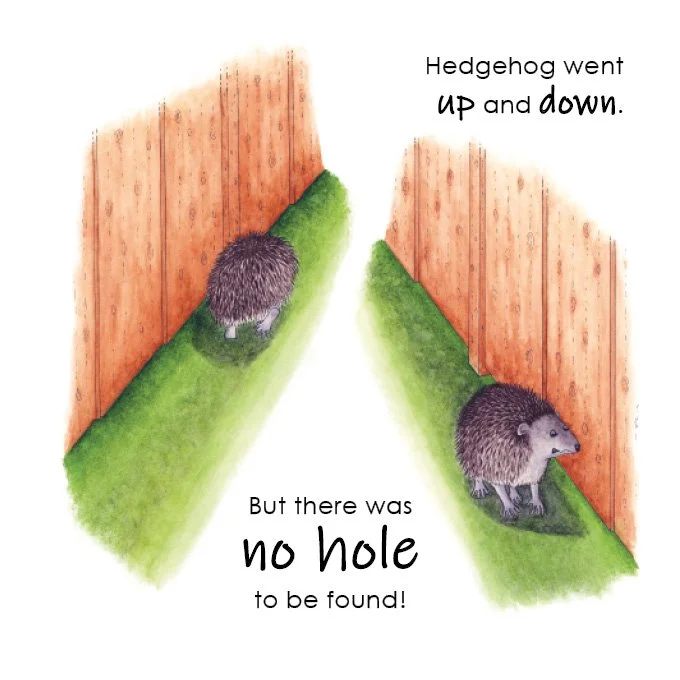
Illustration from the children’s book ‘Hedgehog and the Fence’ by Helene Gardiner
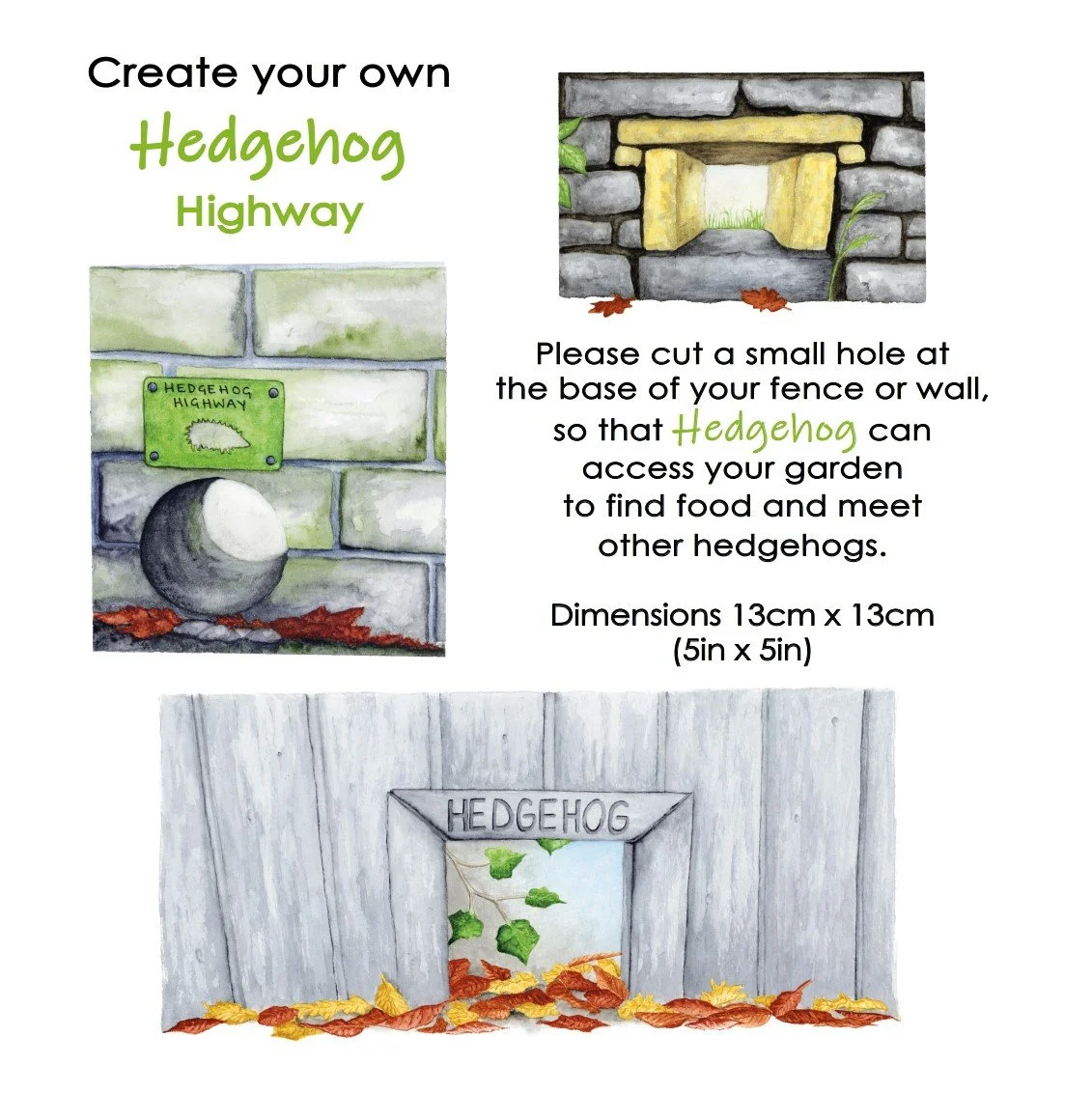
Providing hedgehog holes is essential for creating access between gardens - referred to as ‘hedgehog highways’.
Of course, we don’t need to go to this extent; a small hole, 13cm (5 inches) square, is sufficient, but remember to link to all adjoining gardens or spaces so hedgehogs can pass through.
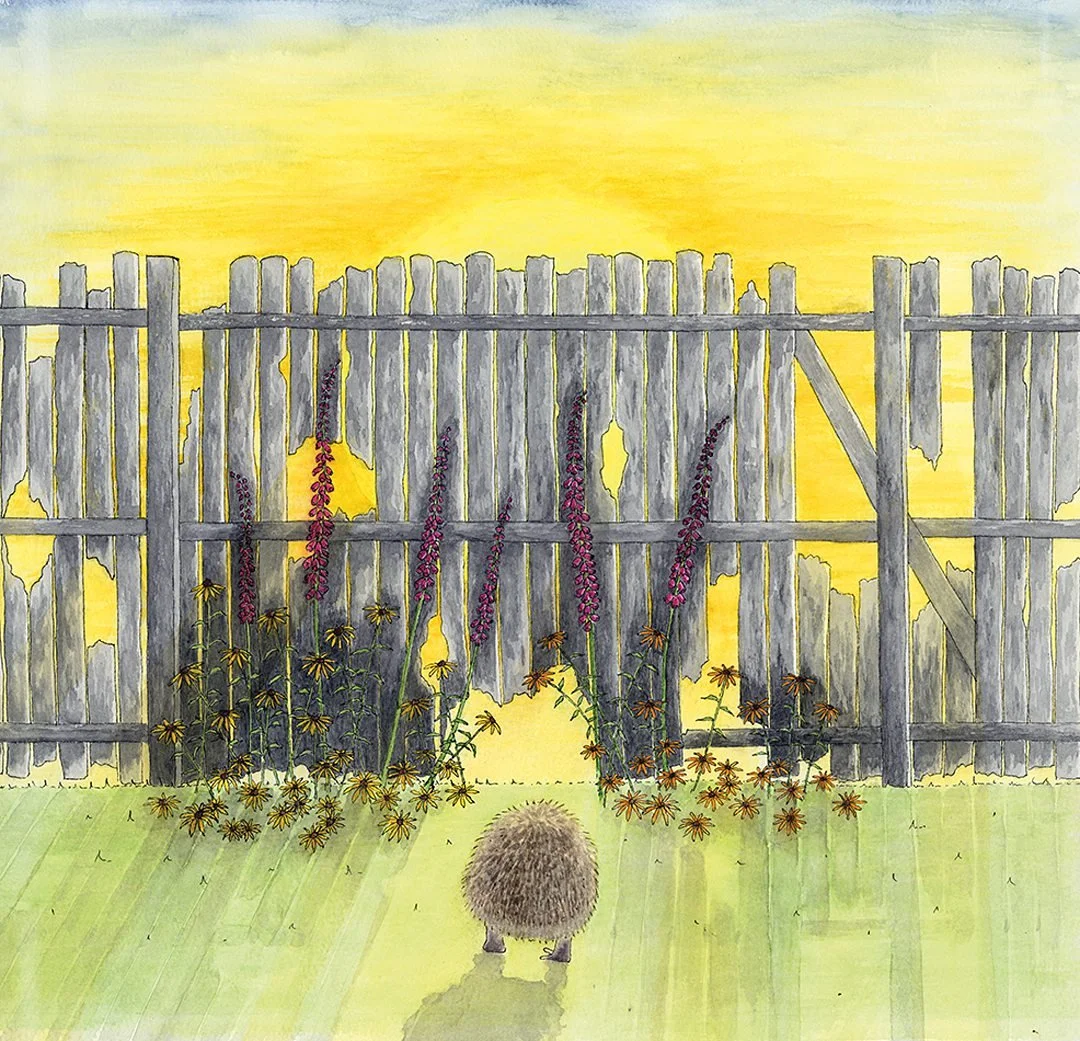
Illustration from the children’s book ‘Hedgehog and the Fence’ by Helene Gardiner
Habitat
Leaving a wild section in a secluded area of your garden may encourage hedgehogs, especially if it encompasses hedges, bushes and long grass as these are ideal habitats for hedgehogs. It will also encourage the natural wild food that hedgehogs need to stay healthy.
Areas with leaf litter, twigs and moss offer materials for hedgehogs to make nests to sleep in, raise hoglets and hibernate.

Hog Logs
A decaying wood pile encourages insects such as beetles, earwigs, slugs, millipedes and centipedes. Arranged in a pile with leaf litter, it may attract hedgehogs to nest there.

Food
A hedgehog’s diet consists of beetles, caterpillars, crickets, centipedes, millipedes, earwigs, cockroaches, slugs, worms and other insects such as moths and butterflies. Hedgehogs will also eat small rodents, birds, bird eggs, frogs, small reptiles and snakes. If available, they may also eat some native mushrooms, berries, seeds, and fruits.
Native plants (such as honeysuckle, dog rose, hawthorn and blackthorn, in the uk) are caterpillar food plants for a wide range of moths, which then lay eggs on the leaves. The new caterpillars often descend to the ground to pupate before becoming adults, offering great food for hedgehogs.
It can be helpful to give hedgehogs a nutritional boost when they emerge from hibernation and in the run-up to hibernation to rebuild or build up fat reserves. However, the right food is essential to avoid making hedgehogs sick. A high-protein ‘meaty’ (avoid fish) cat food (without chemical additives) containing less than 15% fat and no pea fibre is a good start.

Water
A clean, chlorine free, fresh water source is essential for hedgehogs. A healthy pond can provide a welcome source of water and encourage a variety of additional natural food sources for hedgehogs, but remember to make sure it is hedgehog-safe!
Here is some basic guidance on how to construct a pond or mini pond.

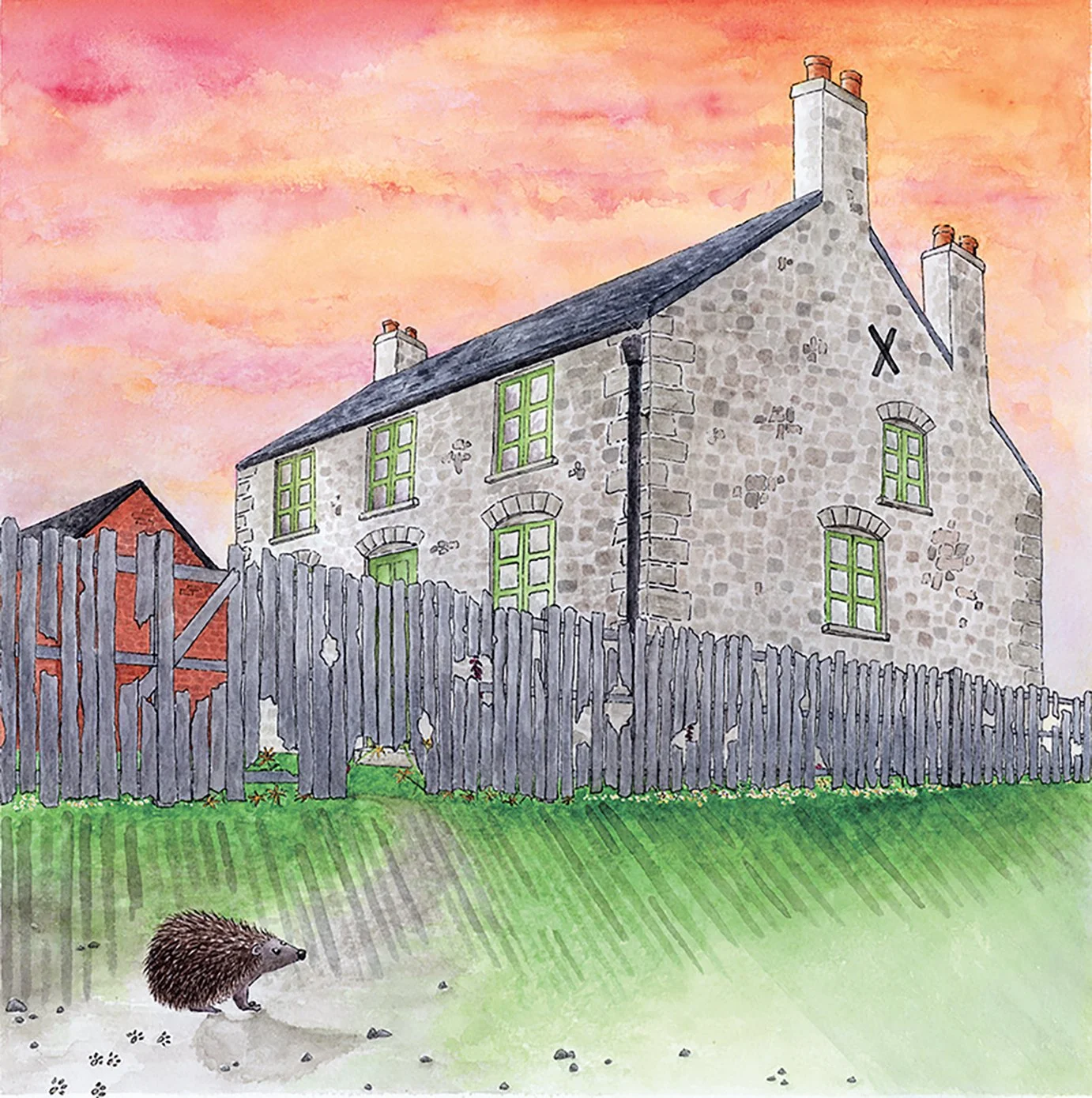
Hedgehogs Need Room To Roam
Highlighting the importance of linking gardens with ‘Hedgehog Highways’.
It may surprise you, that hedgehogs are estimated to have a home range of between 25 - 50 acres or 10 - 20 hectares. That’s an area the size of up to 160 olympic-size swimming pools or almost 24 football fields!
Illustration from the children’s book ‘Hedgehog and the Fence’ by Helene Gardiner
Thank goodness that hedgehogs aren’t territorial because right now, British hedgehogs are fighting a battle for survival. In a little more than a decade, we have lost almost half of our British hedgehogs, who are now listed on Britain’s Red List for Mammals.
Reasons For Decline

Reasons for their decline are thought to include habitat loss and fragmentation, an increase in intensive agriculture and a decline in suitable food sources.
Reducing Fragmentation
Hedgehogs, like many animals, require widespread territories to access sufficient food and meet other hedgehogs. So, one way we can address the problem of fragmentation is by providing a ‘wildlife corridor’. In terms of urban hedgehogs, this means linking gardens via ‘hedgehog highways’.
You can help hedgehogs by linking up your garden with your neighbours, creating your own hedgehog highway. Learn how to link your garden.
A section of clay or plastic soil pipe - make sure it is a commercial soil pipe, which is a larger diameter of 16cm, rather than a domestic soil pipe, which is only 11cm.
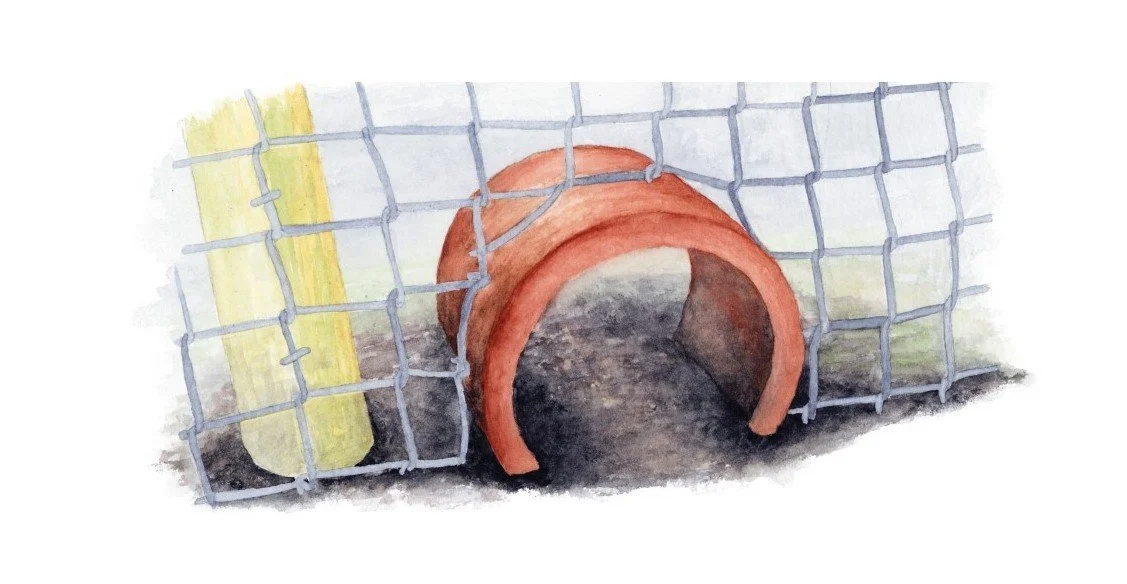
Illustrations from the children’s book ‘Hedgehog and the Fence’ by Helene Gardiner
Helping Our Hedgehogs
We can all help hedgehogs in their fight for survival.
Creating wild areas or vegetative cover in gardens and parks, and maintaining rural field margins and hedgerows, provides habitat and potential food sources for hedgehogs.
Learn how to encourage hedgehogs and other wildlife into your garden here.

Hedgehog Awareness Week 2022
Garway School are learning about Hedgehogs as part of their curriculum.

Garway Junior School, Herefordshire, has been working hard researching the decline in British hedgehogs as part of their ‘sats week’ - what a fabulous use of their time!
It’s so nice to see schools incorporating conservation into their learning.
Here are two of their reports - as part of Hedgehog Awareness Week, I think they deserve a shout out!


Author - Robyn, Garway Junior School, Herefordshire


Author - Sid, Garway Junior School, Herefordshire