

Hidden Beauty
Among the many wild flowers you will find in The Weir Garden is the Hellebore. Unassuming plants, they’re easily overlooked, but their delicate blooms have captivated hearts for generations. Belonging to the Ranunculaceae family, hellebores (also known as Christmas Roses, Lenten Roses, Snow Roses, Winter Roses) signify ‘hope in darkness’ due to their winter arrival, and ‘new beginnings’ with the arrival of Spring.
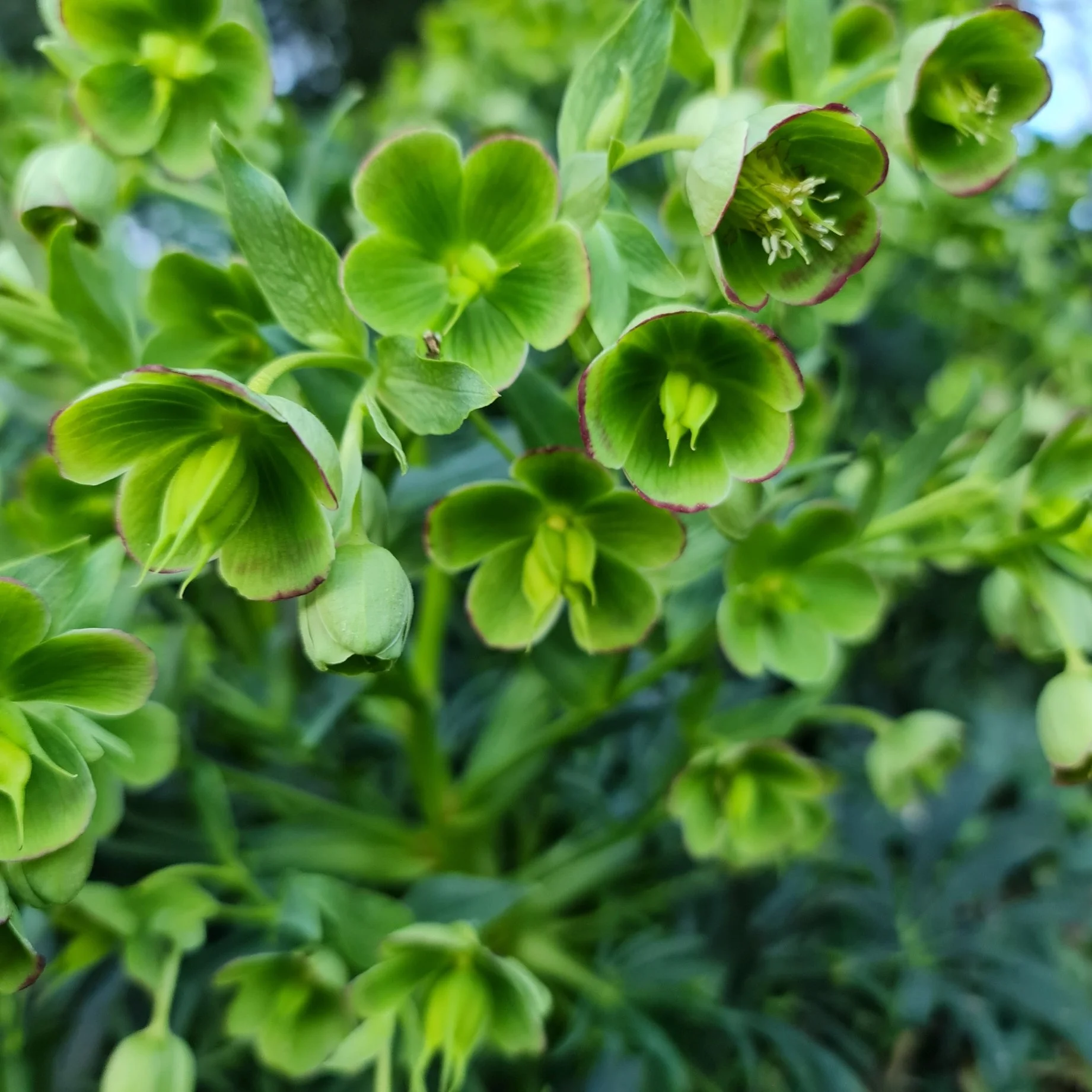
The Hellebore’s history dates back to ancient Greece. Hippocrates, the renowned Greek physician, reportedly harnessed hellebore extracts for medicinal purposes. Used to treat madness, the plant’s potency and toxic nature necessitated careful handling, and its name is thought to derive from the Greek helléboros, likely a derivative of heleîn ("to injure") and borá ("food"). Injure-food would not be a name that inspired confidence in my physician!
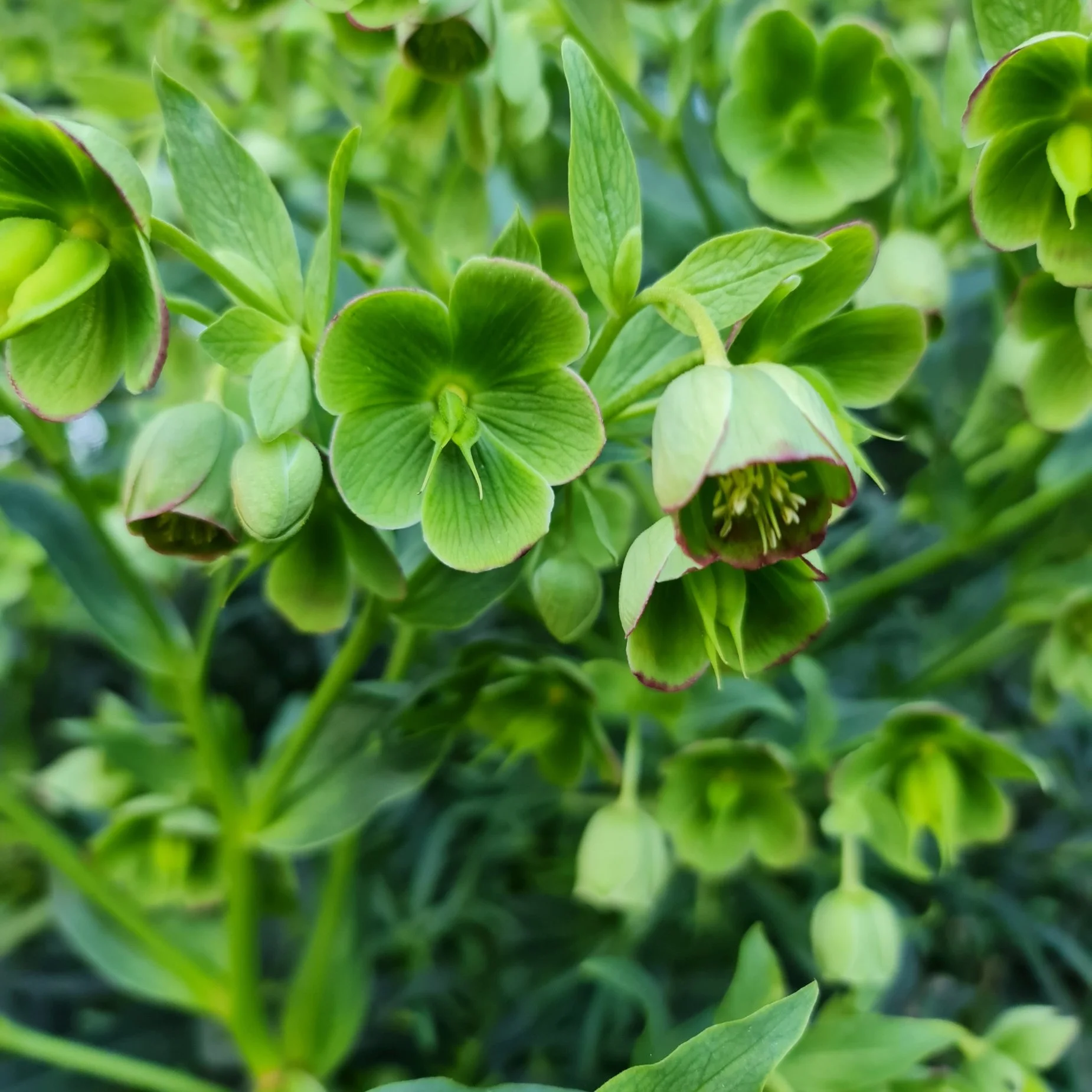
In the realm of folklore, hellebores were believed to possess protective powers, warding off malevolent spirits and sorcery. Ground to a fine powder and spread on the ground, it was believed to make people invisible.
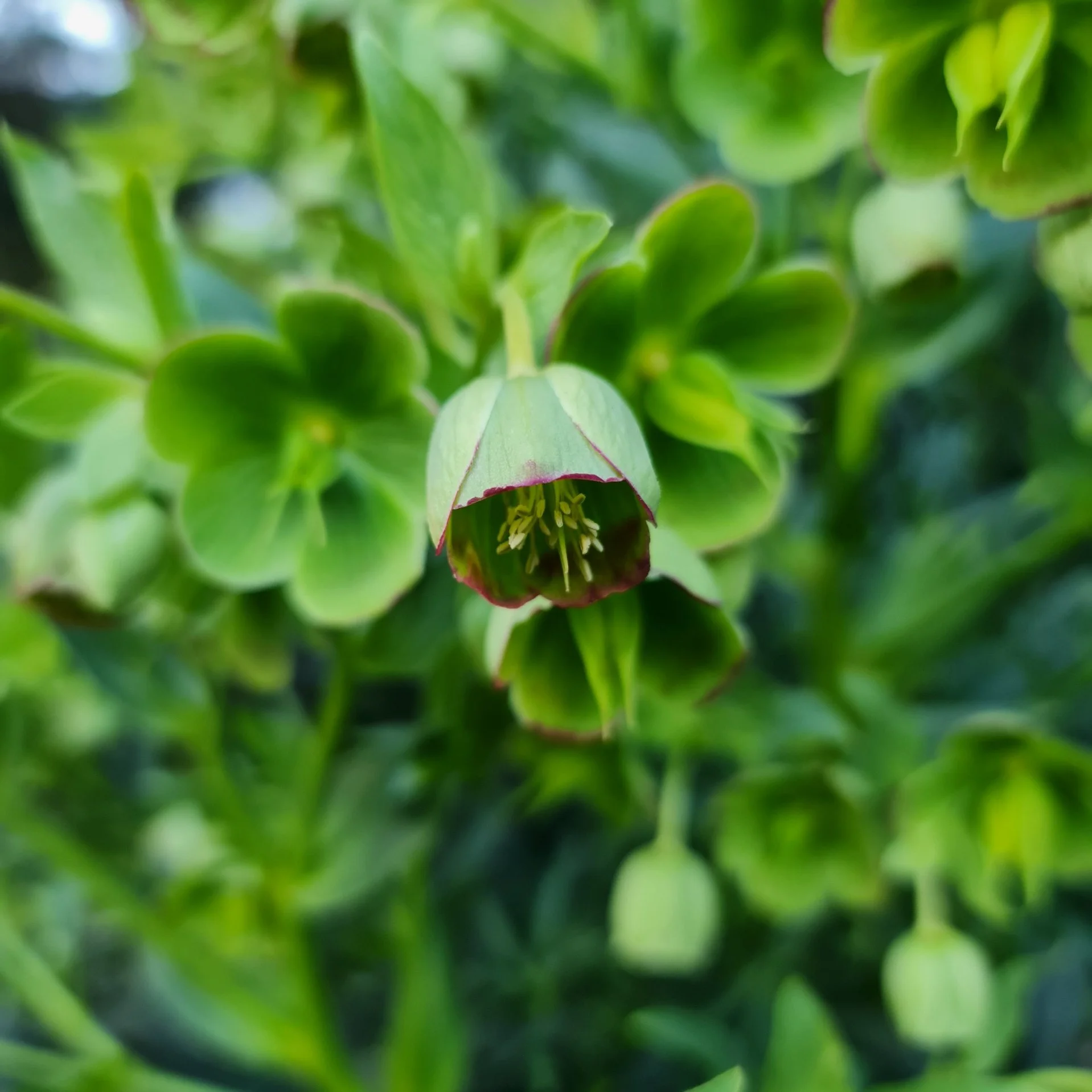
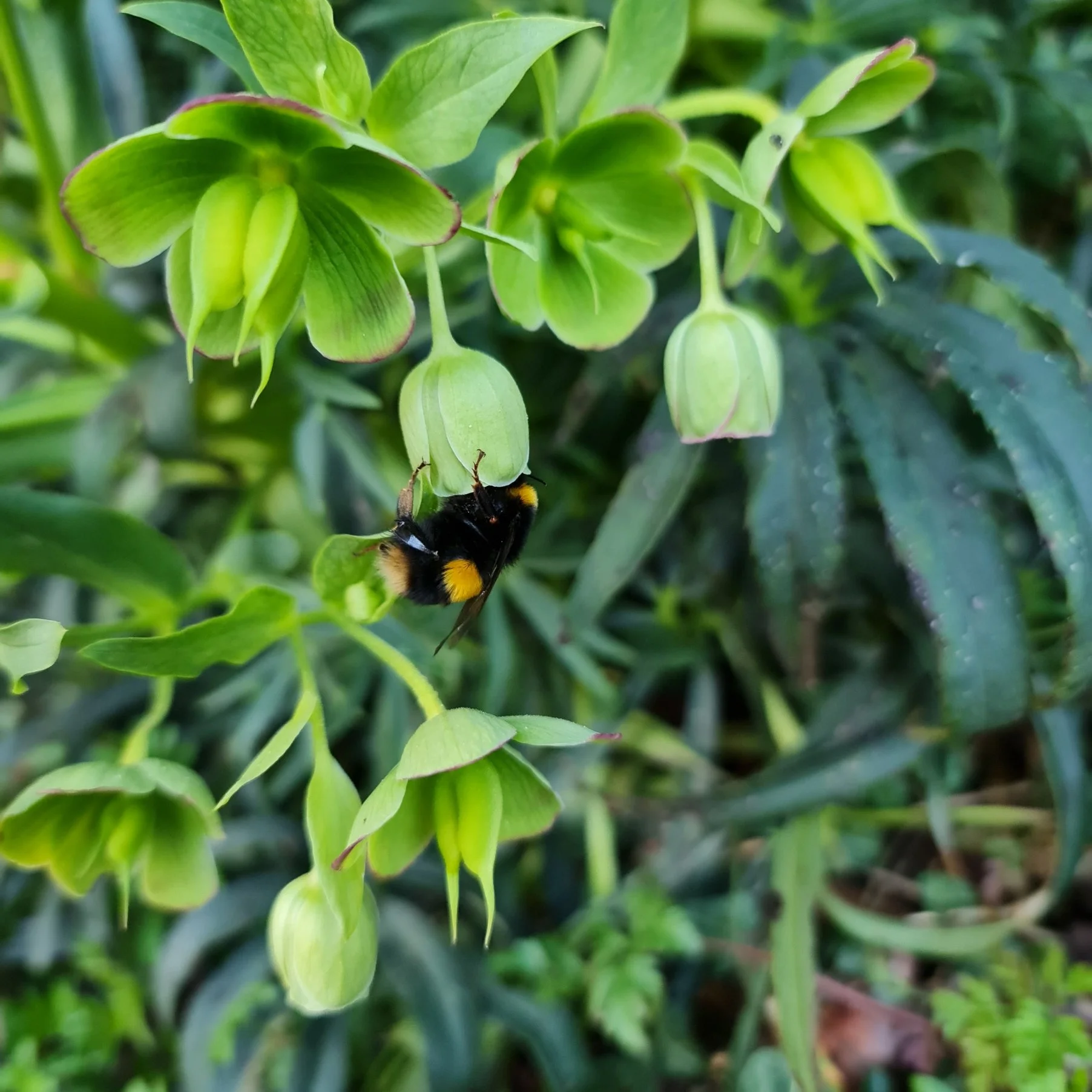
The bumblebees certainly appreciate the Hellebore as one of their earliest food sources.
The Snake's Head Fritillary (Fritillaria meleagris) is a distinctive spring-flowering bulb renowned for its nodding, bell-shaped flowers adorned with a unique, chequered pattern that resembles a chessboard or snakeskin.
Often called the "Leper Lily" or "Chequered Lily," it first appeared in British gardens in 1578. Though its status as a British wildflower has long been debated, it’s an increasingly rare sight in the UK, and no one can deny its striking elegance and beauty.
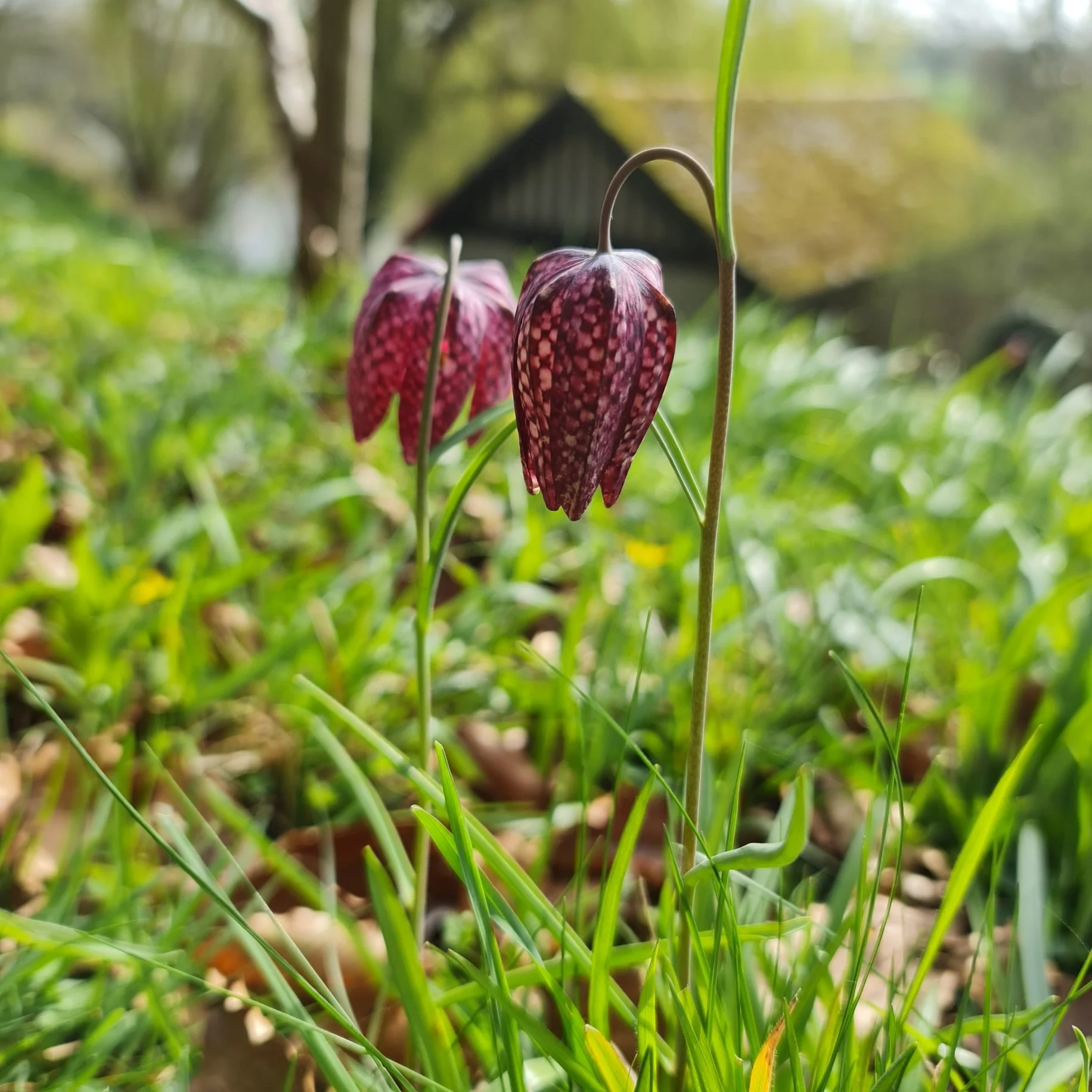
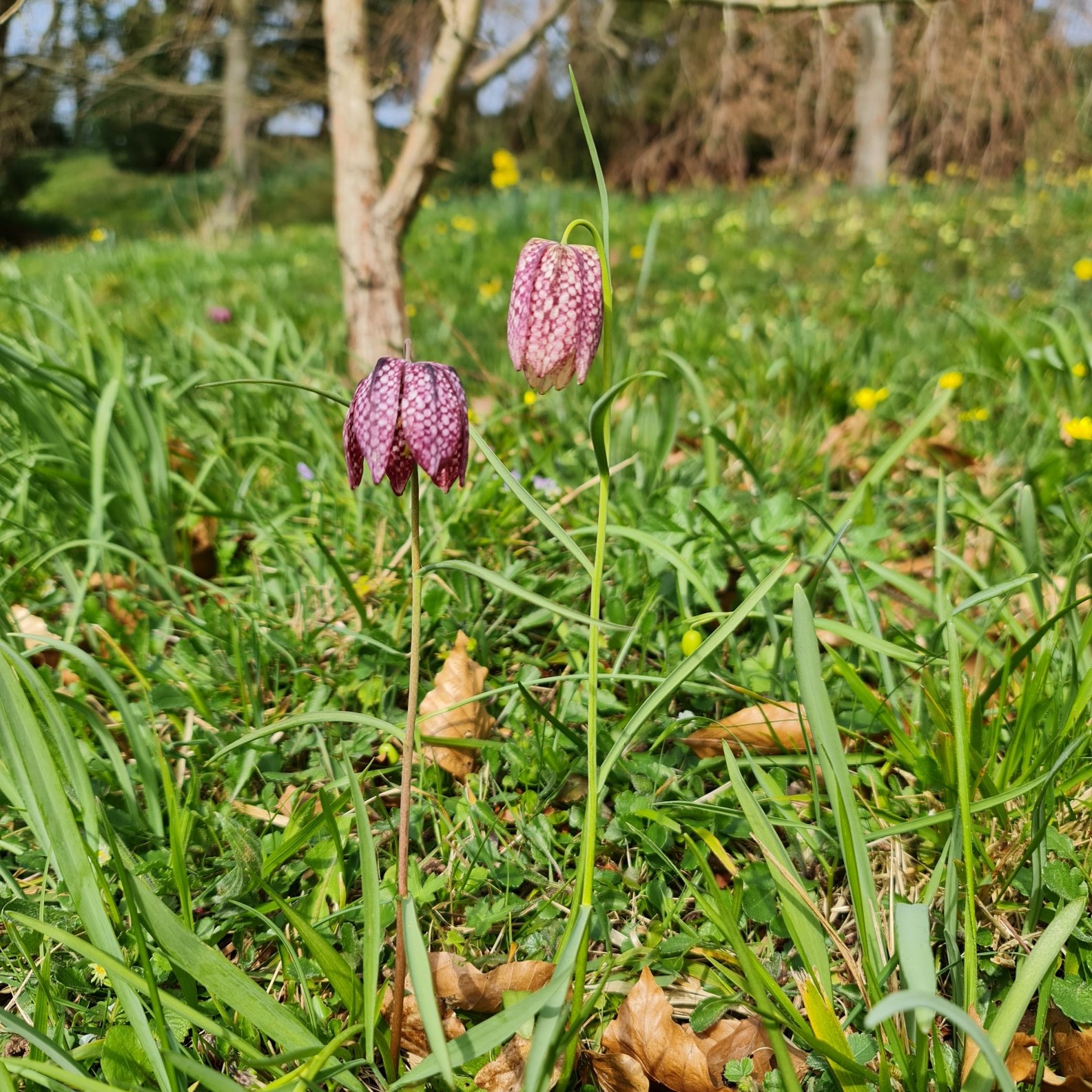
The flowers, which appear from April, are short lived, featuring a delicate, tessellated, checkboard pattern in shades of deep plum, purple, and mauve.
While purple is common, a strikingly beautiful white variant exists (var. unicolor subvar. alba).
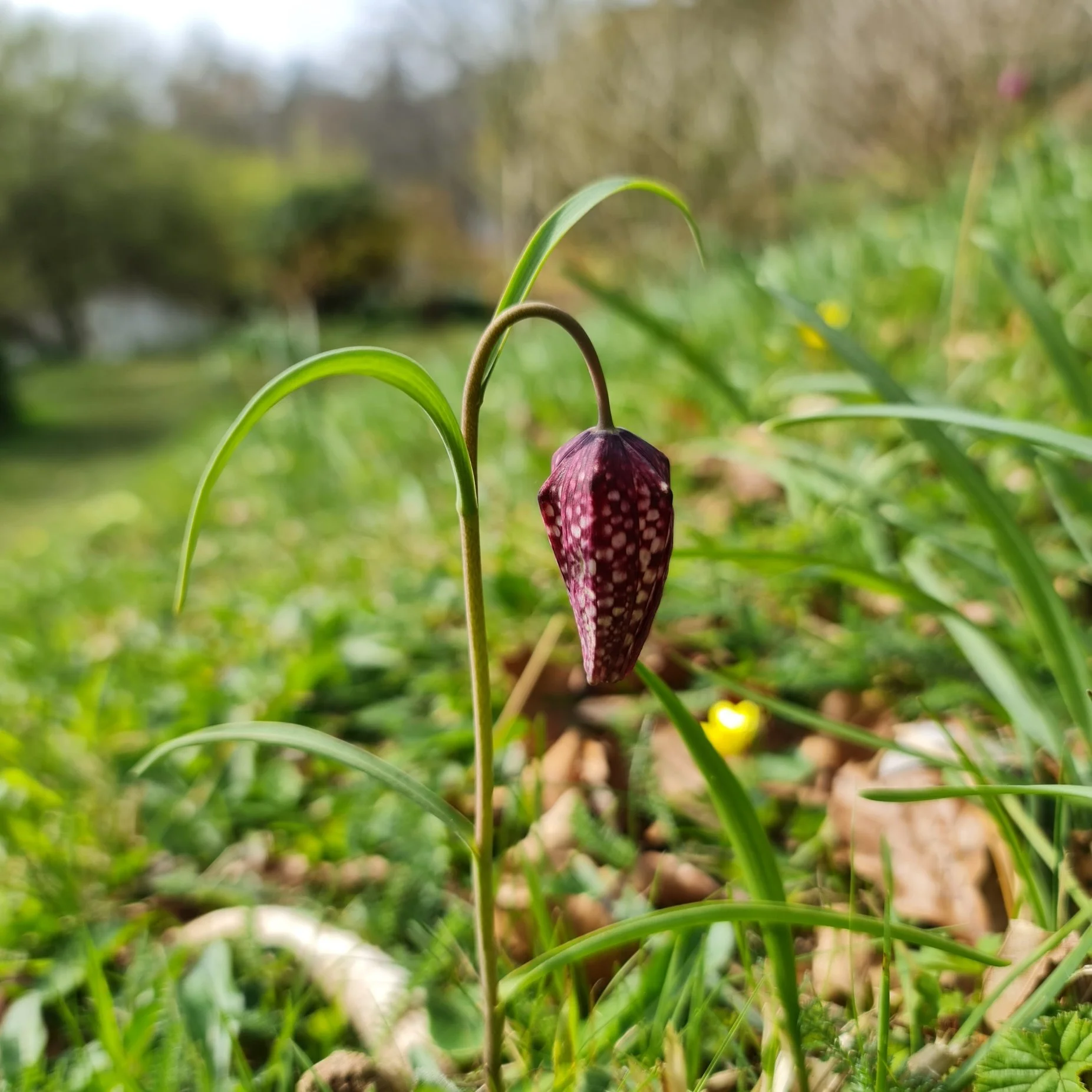
The young bud is tightly closed and initially stands upright like a snake's head. As the flower matures, it nods downward, creating an elegant, bell-like shape, often leading to it being called "Leper's Bells" or "Dead Man's Bells".
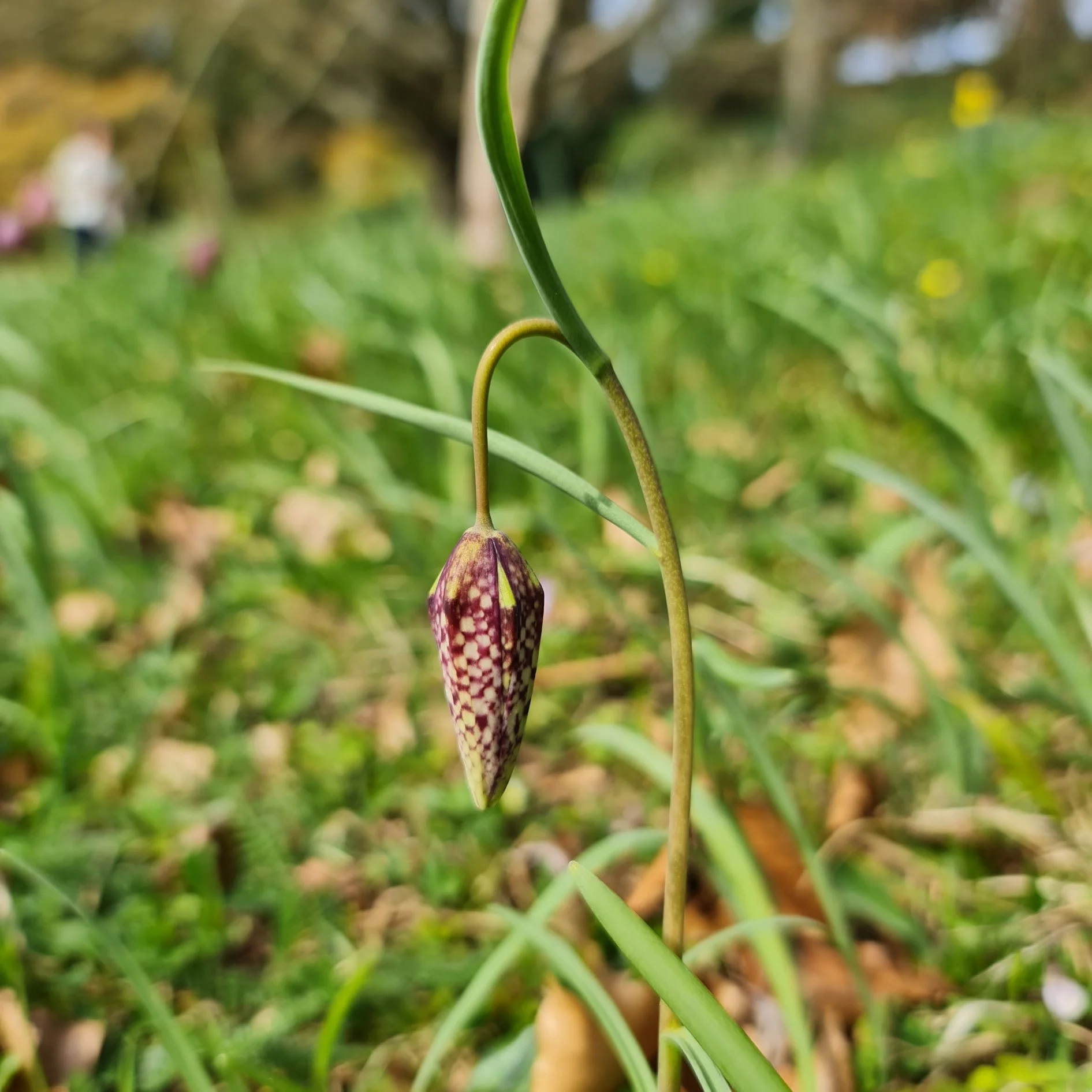
Often described as having an understated, architectural beauty, it is cherished by artists and gardeners for its intricate, almost magical appearance.
Its appearance in the Weir Garden is attributed to Laurie’s determination to preserve the garden’s wild beauty. As Head Gardener, he was much-loved by the team at the Weir and is sorely missed, but can now be found tending the grounds and gardens of Croft Castle.
The nodding star-of-bethlehem (Ornithogalum nutans), also known as the drooping star-of-bethlehem, is a bulbous perennial in the Asparagaceae family. It is known for its fragrant, silver-grey flowers with green stripes that nod or droop on the stem.
A flower that bends well into the woodland setting of The Weir, it’s one I may have missed if I didn’t have a Cavachon that likes to stop every 5 seconds to sniff!
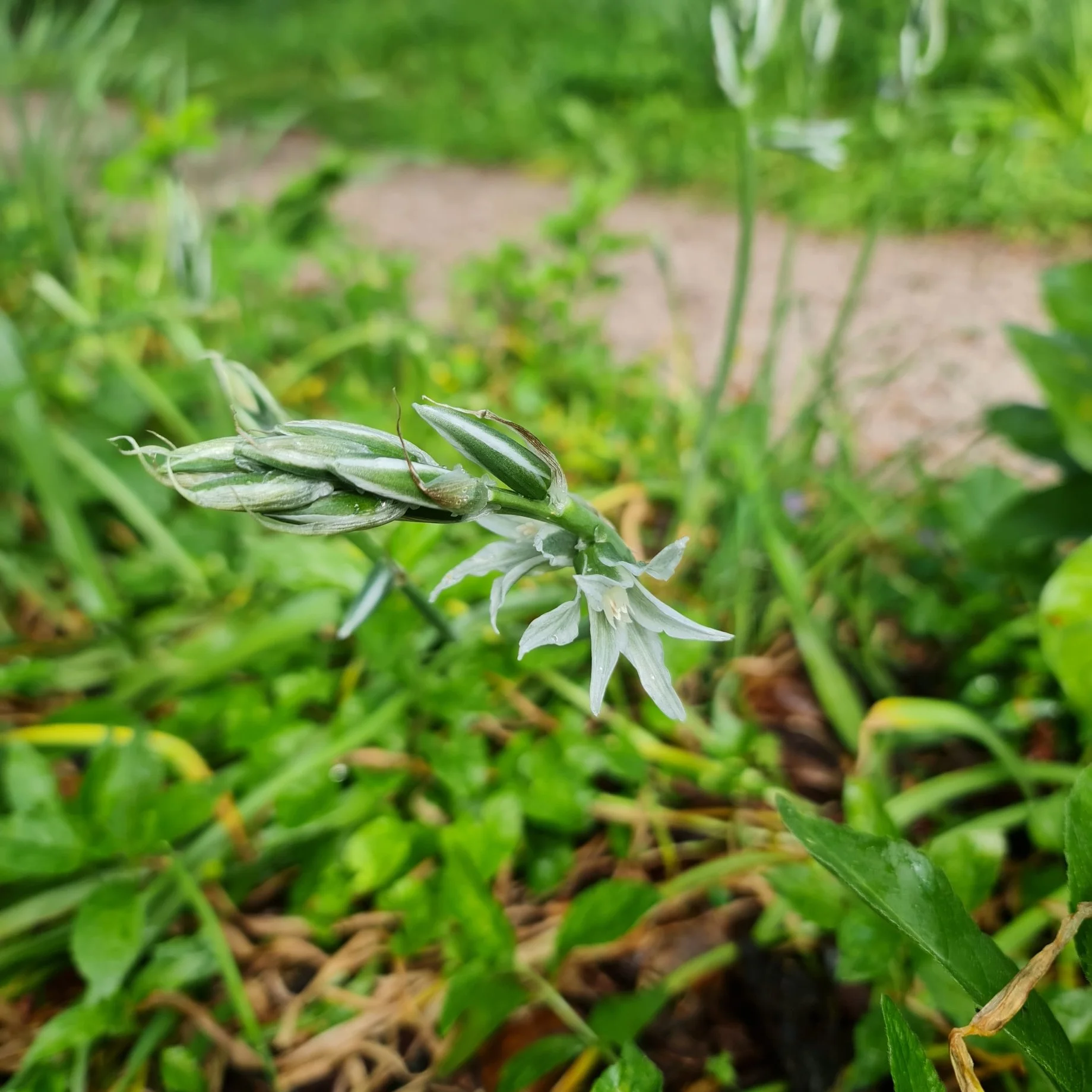
Like other Ornithogalum species, it is associated with the biblical story of the star that guided the Magi to the birth of Jesus.
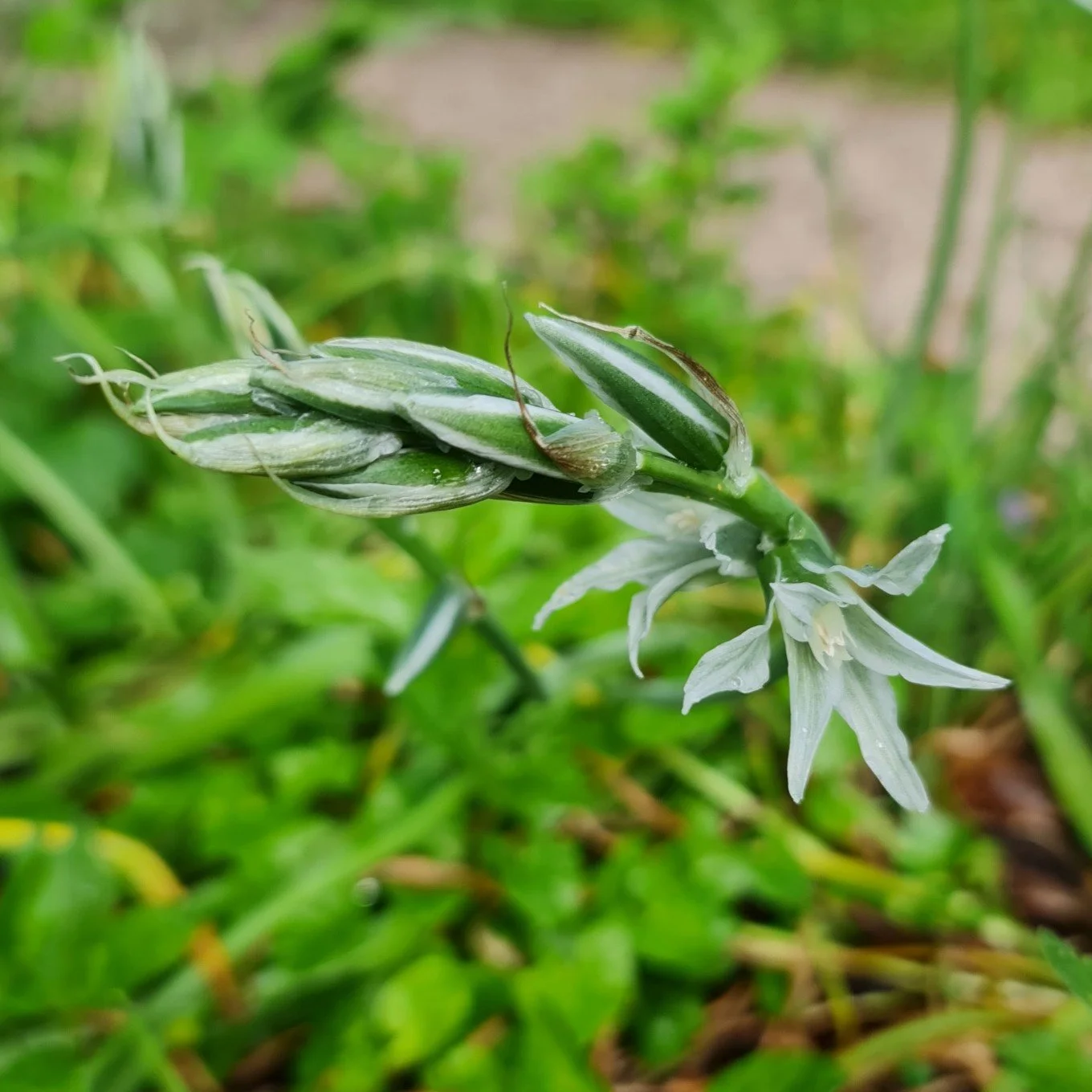
A popular ornamental plant in gardens due to its unique, understated, and fragrant blooms, it is one I wasn’t expecting to find here, nestled happily amongst the wild greenery, revealing that The Weir Garden remains full of surprises!